Looking for the hottest, most electrifying tips and guides? You’ve come to the right place. Here you’ll find walkthroughs, advice, and other insights that will help you get the most out of your HVAC and electrical systems.
THE LATEST FROM THE WIRE...
09.29.26
Fall HVAC Maintenance: What to Do Before You Turn On the Heat
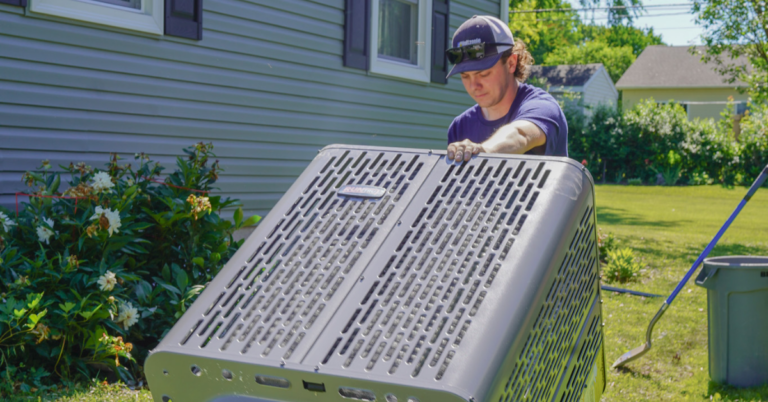
The first genuinely cold night of the season. Always a tense moment. You switch the thermostat over to heat and hope it turns on. Your worry that it won’t isn’t unfounded. An HVAC system that's sat idle all summer is an HVAC system with the highest potential to sputter, trip a limit switch, or not fire up the first time you need it. And because everyone else in the Frederick area is turning on their system at the same time (and also hoping for the best), you may find yourself in queue for a technician to come out and get the problem fixed. Scheduled, fall HVAC maintenance is the solution. Some of it you can do yourself, and some of it needs a technician with the right equipment and training. Here's how to split the work. What Fall HVAC Maintenance Covers Seasonal HVAC maintenance is a scheduled inspection and tune-up that checks your equipment before the season puts demand on it, catching small issues while they're still cheap and quick to fix, and haven’t yet left you in the lurch. That means checking out your furnace, heat pump, or boiler in the fall: whatever's about to carry your home through winter. Furnace and boiler maintenance follows a predictable script. Since these systems have sat idle since spring, a technician checks the same handful of trouble spots every year. Heat pump owners have one extra step. Your system ran all summer in cooling mode, so before it switches over to heat it needs its own seasonal check. Either way, heating system maintenance now means fewer surprises once temperatures drop. What You Can Do Yourself Whether you're working off a formal furnace maintenance checklist or just walking the house room by room, here's what you can take care of yourself, no license required: Replace the air filter. A clogged filter chokes airflow and makes your system work harder than it needs to. Clear your supply and return vents. Furniture, rugs, and curtains that crept over the vents this summer block airflow and make rooms heat unevenly. Give the outdoor unit some space. Heat pump owners should clear at least two feet around the outdoor unit, including leaves, mulch, and anything else piling up against it. Test the thermostat. Switch it over to heat and confirm the system responds the way it should. If yours has been acting up all year, this is also a good time to look at a smart thermostat upgrade. Test your carbon monoxide detectors. Press the test button and swap the batteries. This matters more once you're running a fuel-burning furnace or boiler for hours at a stretch. Walk the house for drafts. Check doors and windows for obvious gaps. Every draft you find is heat your system is paying to replace. Clear the area around the indoor unit. Storage boxes and holiday bins have a way of migrating toward the furnace closet by fall. Give the unit room to breathe. What Needs a Technician All the items below are safety and calibration work that requires tools and training most homeowners don't have on hand. They’re also the backbone of any real heating tune-up: Heat exchanger inspection. This is a safety issue and the core of a furnace safety check. A cracked heat exchanger can let carbon monoxide into your ductwork, and you won't see it without the right experience and equipment. Gas pressure and burner combustion. A technician checks that your system (oil or gas) is burning fuel cleanly and at the correct pressure. Electrical connections, capacitors, and safety controls. Loose connections and worn capacitors are common causes of mid-winter breakdowns, and they're easy to fix if caught early. Blower motor and airflow measurement. A tech confirms your blower is moving the right volume of air, which affects comfort and efficiency all winter. Refrigerant charge and defrost cycle testing. Heat pump owners need this specifically. Low refrigerant or a faulty defrost cycle will quietly tank your system's efficiency. This is what separates a real heating system maintenance visit from a quick filter swap: a technician checking the parts of your system you can't see or test yourself. The Short Version: Your Fall HVAC Maintenance Checklist Think of this as your official furnace maintenance checklist, adapted for whatever system is keeping your home warm this winter: What you can handle: Replacing the air filter Clearing supply and return vents Clearing two feet around the outdoor heat pump unit Testing the thermostat on heat mode Testing carbon monoxide detectors and swapping batteries Checking doors and windows for drafts Clearing storage away from the indoor unit What a technician must handle: Heat exchanger inspection Gas pressure and burner combustion testing Electrical connections, capacitors, and safety controls Blower motor and airflow measurement Refrigerant charge and defrost cycle testing (heat pumps) Why Timing Matters Scheduling availability drops fast once the first cold snap hits. Every homeowner who put off their fall HVAC maintenance calls at the same time, and technicians can only be in one place at any one time. This can all too easily affect repair cost. A worn part found in September is a scheduled repair. The same part failing in January is an emergency call, and you'll likely pay for the rush. If you're noticing odd sounds, short cycles, or uneven heat already, it's worth a look at the signs a furnace repair might be coming before you commit to a full system check. Either way, getting on the schedule now, while there's still room on the calendar, is the easiest way to book a heating tune-up before the rush starts. Or skip the scheduling altogether: Comfort Club members get their seasonal tune-ups booked automatically, plus priority service if anything comes up mid-winter. A Team Effort It doesn't matter whether your winter HVAC is a furnace, heat pump, or boiler. The same logic applies across the board. Do what you can handle, then get a technician in for the rest. The entire process is roughly an hour of your own time plus one scheduled visit from said technician. That's a fair trade for a system that won't quit on the first cold night of the year. Ready to get your fall HVAC inspection on the calendar? Schedule your heating tune-up with Holtzople before the first cold night catches you off guard.
READ MORE09.29.26
Fall HVAC Maintenance: What to Do Before You Turn On the Heat
09.24.26
What to Expect From the Holtzople HVAC Installation Process
08.31.26
Whole-House Surge Protection: Protect Your HVAC After a Storm
08.20.26
Outdoor String Light Safety: Why Outdoor Outlet Installation Comes Before the Lights Go Up
09.24.26
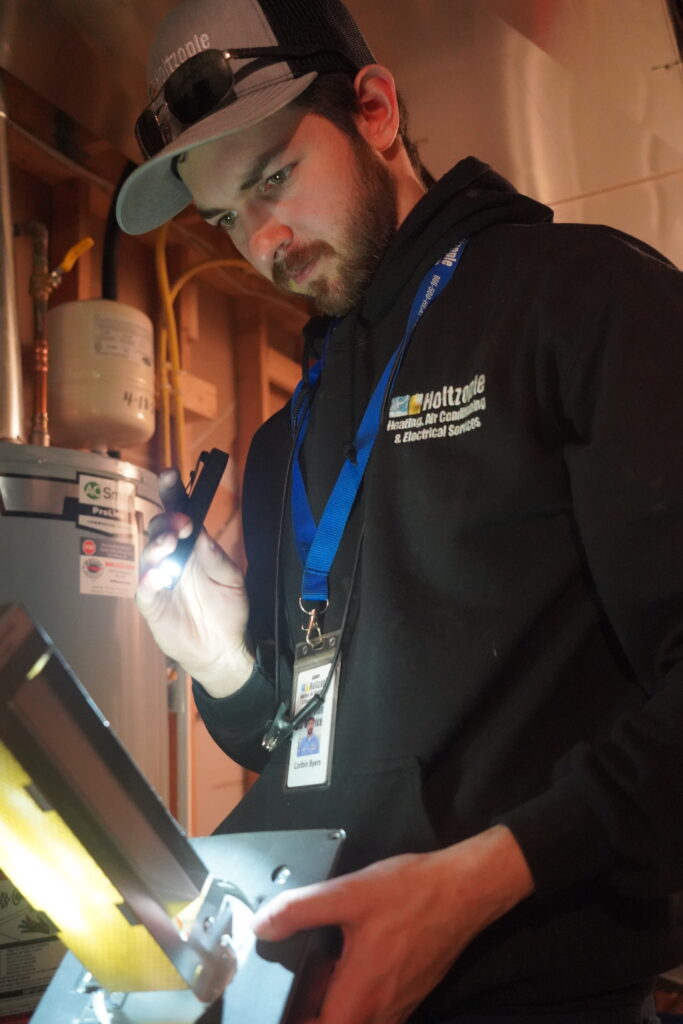
When a system fails, most homeowners aren’t evaluating equipment. They’re deciding which company they trust enough to be in their home and make the fixes that will last. The clearest window into whether a contractor deserves to be hired is the HVAC installation process itself. At Holtzople, we can tell you every step of what happens from your first call to the final walkthrough, and what to look for from any trusted HVAC contractor. Inside the HVAC Installation Process Every HVAC system replacement starts with an in-home assessment. After getting information about your home directly from you (are some areas too hot or cold?), one of our Comfort Consultants does a walkthrough, measures square footage, checks insulation, evaluates ductwork, and runs a load calculation. A system sized to your house is the difference between even, reliable comfort and a unit that short-cycles, runs constantly, or never quite keeps up. From there, we walk you through equipment options, explaining why a particular size, efficiency rating, or brand fits your home and budget. Once you choose, we handle permitting and scheduling. Some jobs qualify for next-day installation. Others need a few extra days to pull permits or coordinate equipment delivery. Either way, we give you the timeline up front. Throughout the HVAC installation process, the goal stays the same: a system that's sized correctly, explained clearly, and scheduled honestly. What Happens on Installation Day Our crew arrives on time and walks the job with you before any work begins, confirming the plan and answering last questions. Floors and work areas get covered to protect your home, we haul away your old system, and the new equipment goes in: This could include refrigerant lines, ductwork connections, electrical, and controls. Most HVAC companies subcontract electrical work, which means a second company, a second appointment, and a second point of contact if something goes wrong. Holtzople keeps electrical in-house. One crew handles your entire HVAC installation process, from equipment to wiring, with no scheduling gap between contractors. Customers describe the same pattern job after job. Take this review snippet, for example: "At 9:35am Kevin called to say that he was en route and he arrived at 9:45. Upon arrival, Kevin immediately put on shoe covers to protect our floors." -Donn Wishka Wondering how long the process takes? Here’s the answer straight from our FAQ page: How long does HVAC installation take? A straightforward system swap typically finishes in a single day. What extends it: ductwork modifications, electrical panel upgrades, relocating equipment, tight attics or crawl spaces, or homes with multiple systems. Your technician confirms your specific timeline before work starts, not after. Testing, Documentation, and the Final Walkthrough Before we leave, we verify refrigerant charge, airflow, and safety and combustion checks. From there, we run the system through a full cycle to confirm it performs the way it was designed to. You'll get a thermostat walkthrough, your filter location and replacement schedule, and warranty registration paperwork to keep. During a follow-up, performance gets measured, and you know how to run your new system, before we consider the job complete. Who You're Letting Into Your Home Many of our technicians are NATE-certified, meaning they’ve passed a national exam covering real-world HVAC systems. It's the credential the industry treats as the standard for competence, and every trusted HVAC contractor on our team is required to hold it. Holtzople holds an active Maryland HVAC license (02-21528), a Maryland Electrical license (4153), and a Pennsylvania license (025255), and we’re fully bonded and insured. We've also been named Best of the Best in both HVAC and Electrical categories for 2024 and 2025, hold an Angi Super Service Award, carry BBB accreditation, and belong to ACCA, the trade association for HVAC contractors! Check this page or our site footer for verification. More Than 20 Years in These Communities Holtzople started as a family business more than 20 years ago and remains one to this day. We're headquartered in Emmitsburg, with a dedicated Frederick office opened specifically to shorten response times for customers closer to the city. As a family-owned HVAC company rooted in the same communities we serve, we don't have the luxury of a bad installation. The homeowner on the other side of that job is often a neighbor, and our reputation is the business. What Our Customers Say About the Process "Today he was actually a little ahead of schedule and called to see if it would be okay to arrive early." -Randy B "The staff worked as a team and built on the expertise of one another. They were more than willing to answer questions and provide instruction on the use of the system…The job site was cleaned after the work and looked better than when they arrived." -Robert Siepielski Read more on our testimonials page, or check our reviews directly. What You Can Expect Us to Tell You Up Front Before you sign anything, here's what we commit to: A full load calculation A read on your existing ductwork and electrical capacity, including what it will take to bring either up to code Clear pricing before work begins Confirmation of who pulls the permit and what your warranty covers on labor versus equipment Cost is often the real hesitation behind any HVAC system replacement. We offer financing through Trane (service and installation) and GreenSky (service only), along with lease-to-own options, so a new system doesn't have to be paid for all at once. Ready to Talk About Your System? If your system is aging or underperforming, a trusted HVAC contractor (also known as a Comfort Consultant) walks you through the full HVAC installation process before you commit to anything. Schedule an in-home assessment and get a FREE estimate on an HVAC system replacement, and we'll size your home correctly from day one. Once your new system is running, you get a complimentary year of Comfort Club membership: two annual visits, priority scheduling, and a team that's still around long after installation day.
07.15.25
We’re typing this blog with clear eyes and happy lungs. Know why? Because we recently changed our air filters and it feels. So. Good. These rectangles of synthetic fibers are a godsend when it comes to keeping your indoor air clean. They prevent dust buildup, help with allergies, lower your energy bills, and ensure your HVAC isn’t overworking itself. If you’re wondering whether it’s time to change your own home air filters, we’ll cover the big indicators in this blog. Increased Allergy or Respiratory Symptoms Allergies can make or break someone’s day, week, month, etcetera. To those who don’t have severe allergies, it may sound like a mere inconvenience, but when your eyes won’t stop itching and watering and your nose keeps running, you simply can’t remain productive or enjoy what life has to offer. If you’re experiencing these issues within your own home, it’s probably time for an air filter change. It’s not just about itchy eyes and runny noses, though. Symptoms can include: Sneezing and coughing Irritated eyes Asthma flare-ups General respiratory discomfort When your face feels fresh and you’re not struggling through allergy attacks, you’ll be thanking us! Dust Buildup Around Vents and Furniture So it’s only been a day or two since you cleaned, and dust has already started to settle—especially in the areas around vents and furniture. What gives? Shouldn’t that dust be swept away by your vents? Well, yes, and if it isn’t, you should probably check your home air filters. If they’re dirty, you’ll notice an alarming amount of dust on vent covers, furniture, and shelves. On top of that, the air itself may not be completely clear and a musty smell could be lingering. Higher Energy Bills Okay, so maybe you don’t have any allergies to think of. How are your energy bills looking, though? Even if you’re totally fine with the air quality in your home (despite the signs), clogged air filters mean air isn’t flowing through them as easily as it should. Know what that means? Your system is overworking itself trying to keep up, translating to unnecessarily high electric bills. So, if you notice any of the following, it’s definitely time for an air conditioner filter replacement: Sudden or inexplicable increase in the costs of utilities Suspiciously frequent cycling or running of your system HVAC is straining to maintain the temperature you set your thermostat to You Can’t Remember the Last Time You Changed It Maybe your system isn’t showing alarming signs of struggle. Maybe your allergies are fine or at least manageable. And maybe you aren’t seeing much dust buildup. That’s all well and good, but take a moment to think about the last time you changed your home air filters. Was it more than six months ago? Over a year ago? Can you even remember? If you truly can’t recall when you last performed an air filter change, it’s time to, well, change that. Sure, you may not be experiencing the issues we’ve discussed above to a severe degree, but they’re there. It’s more of a situation in which you don’t know what you’re missing out on: Your electric bill is fine, but it could be even lower. Your allergies aren’t crippling you, but they may be present enough to hinder your comfort without you realizing it. Dust in your home may not be visible, but it’s there. We often equate this to going to the eye doctor. Many people don’t realize how bad their vision truly is until they take an eye exam. And once they put those prescription lenses on for the first time, they realize how much better everything is now. Most home air filters need to be replaced every 1 to 3 months. This depends on factors such as filter type, system usage, how many pets you have, and how severe your allergies are. When you don’t perform an air conditioner filter replacement frequently enough, you could be dealing with any combination of the issues we’ve already discussed. An Air Filter Change Can Lead to Total Home Comfort Regular replacement of your home air filters is a tough thing to remember, despite the simplicity of the task itself, and it can all too easily fall by the wayside in your long list of housekeeping chores. But if you get into a good habit of performing an air filter change on a frequent enough basis (every 1–3 months), your home comfort can skyrocket. Your allergies will be under control, dust won’t build up in your spaces, and your energy bills won’t send you into panic mode. Set reminders on your phone to make sure this habit takes hold. If you want to take it a step further, sign up for the Holtzople Comfort Club. With regular service calls, home air filters are one of the first things we check! Get in touch and learn more today!
08.31.26
Summer storms roll through Frederick County fast, and the power flickering is only half the problem. The real danger often comes a few seconds later, when the utility grid snaps back on and sends a spike of voltage racing through your home's wiring. It has the potential to fry expensive equipment, and your HVAC system is usually sitting right in its path. That could spell trouble… unless you have whole-house surge protection. The Storm Threat Nobody Warns You About Most homeowners brace for the outage itself. They strategically place candles and flashlights throughout the house, and steps are taken to save perishable food. Fewer people consider that the following surge can do more damage than the storm did. Surges tend to come from three places: The voltage spike that hits when the utility restores power after an outage A direct or nearby lightning strike traveling through the electrical system Utility grid switching, which can send unexpected jolts through the line even without a storm in sight A backup generator and whole-house surge protection solve two different problems. A generator keeps your HVAC system running during the outage. It's what protects that same system when the power comes back. If you haven't already, we recommend you read our post on backup generators for home HVAC systems as a companion to this one. Why Your HVAC Is the Most Expensive Thing a Surge Can Fry A power surge doesn't discriminate, but it does find the most sensitive components first. In a modern HVAC system, that means: The compressor Control and circuit boards Capacitors Smart thermostats These parts can be expensive to replace. A single fried compressor or furnace control board typically costs several times more to repair than it costs to install an HVAC surge protector in the first place. A surge doesn't have to come from a storm at all. Every time your AC compressor or a window unit cycles on and off, it creates a small surge of its own, which means a share of surge damage can originate from right inside the home. What’s Whole-House Surge Protection? Put simply, whole house surge protection is a device installed at your electrical panel that detects excess voltage and diverts it safely to ground before it reaches your appliances. There are generally two main types: one installed further upstream near the meter or main service, and one installed at the panel itself. Both work toward the same goal, and a licensed electrician can walk you through which setup makes sense for your home. If you're shopping for a surge protector for HVAC equipment specifically, the panel-level installation is usually the piece that matters most. It's what stands between the grid and every hardwired system in your house. Whole House vs. Power Strip: Why Outlet Protectors Can’t Save Your AC A power strip only protects what's plugged into it. Your HVAC system is hardwired directly into your electrical panel, so outlet-level devices can’t do anything to shield it. The smartest approach is layered: a whole-house unit at the panel to protect your major hardwired systems, plus point-of-use power strips for sensitive electronics like computers and entertainment equipment. One doesn't replace the other. Is a Surge Protector for HVAC Equipment Worth It? HVAC surge protector cost depends on your panel setup, your home's wiring, and what level of protection you're adding, so it's worth getting a firm number from Holtzople rather than relying on a generic estimate. If cost is the main thing holding you back, keep in mind it's a fraction of what a single HVAC repair after a surge would be. A few things to consider when planning: Surge protection devices don't last forever. Like most electrical equipment, they wear out over time and eventually need replacement. Coverage for surge damage varies by homeowners insurance policy, so double check with your provider rather than assuming you're covered. Weighed against the cost of replacing a single fried compressor or control board, a whole-house unit is a comparatively small investment for the protection it provides. When to Add Surge Protection (And Who Should Install It) A few signs it's time to look into this seriously: Your electrical panel is older or hasn't been updated in years You've already lost an appliance or piece of equipment to a surge You're heading into another stormy season You've recently invested in a new HVAC system or smart home equipment Surge protection isn't a DIY project. It has to be installed correctly at the panel by someone who understands how your home's equipment draws power. Whether you're adding an HVAC surge protector for the first time or upgrading an aging one, professional installation is what makes it work correctly. Holtzople's licensed electricians and HVAC technicians work together on this kind of job, which means the surge protection services we provide account for both the electrical side and the HVAC side of your system. Don't Wait for the Next Storm Everyone prepares for the outage, but what about the surge? That’s the part that does the damage. Luckily, it’s largely preventable. If your home hasn't been evaluated for whole-house surge protection, now is the right time. Reach out to Holtzople to schedule an assessment and learn more about our surge protection services.
02.16.26
If you’ve ever had a furnace break down on the coldest day of the year or an air conditioner on the hottest, it’s not because the universe has it in for you. At these points, in such harsh conditions, these machines are running almost constantly. As such, if they’re heading for a breakdown anyway, it makes sense that one is going to happen at the worst possible time. But machines like furnaces typically give warning signs they’re about to leave you huddling around the hearth for warmth. Today, we’ll cover five common signs a furnace repair might be in your immediate future, and why addressing them is key to avoiding costly repairs or replacements. 1. Inconsistent Heating Are some rooms in your home warm while others are chilly? This can be a clear sign your furnace is struggling. Uneven heating can be caused by several issues, such as clogged air filters or a malfunctioning thermostat. Clogged filters block airflow, which reduces your furnace’s efficiency and results in inconsistent temperatures. And if your thermostat isn’t calibrated correctly, it can cause the furnace to run longer in some areas while leaving others underheated. What to Do: Regularly change your air filters and ensure your thermostat is properly calibrated. If the problem persists, it could be time to call a professional to inspect the system. 2. Unusual Noises Furnaces shouldn’t make a lot of noise, just that gentle rumble that lets you know the system has switched on and will soon be sending warming air through your ductwork. So if you hear unfamiliar sounds—including banging, squealing, or rattling—it's time to pay attention. The following furnace sounds can be indicative of an upcoming furnace repair: Banging: Your furnace’s burner is having trouble igniting. Alternatively, there may be a buildup of gas in the combustion chamber Squealing: Your furnace may be having problems with its fan belt or motor. Rattling: Your furnace may have loose components or debris in the system. What to Do: Don’t ignore strange sounds. Your furnace is trying to tell you something. Call in a technician to inspect it and identify the source of the noise to avoid further damage. 3. Frequent Cycling Frequent cycling, or "short-cycling," occurs when your furnace turns on and off repeatedly in short intervals. This not only reduces the system’s efficiency but causes additional wear and tear on components. Short-cycling may be caused by a malfunctioning thermostat, clogged filters, or ductwork blockages that prevent the furnace from running at full capacity. What to Do: If your furnace is cycling more than usual, check the filter first. If it’s clean and the problem persists, it’s time to consult a professional for some official furnace troubleshooting. This may include inspecting the thermostat, checking airflow, or inspecting other key system components. 4. Rising Energy Bills A furnace that’s struggling to perform efficiently will consume more energy than needed, leading to higher heating bills. If your energy costs have been steadily increasing despite steady usage, your furnace could be the culprit. Common causes of increased energy consumption include dirty air filters, worn-out components, or a system simply not operating at its peak. What to Do: Schedule regular maintenance to ensure your furnace is running efficiently and to potentially avoid needing a furnace repair. Regular maintenance typically includes a component cleaning, an air filter replacement, and a tune-up—all of which will help ensure the system is operating optimally. 5. Strange Smells Like with strange sounds, it’s important to pay attention to any strange smells emanating from your furnace and/or ductwork. Some odors are harmless, but others signal serious problems: Burning: This smell could merely indicate some harmless dust burnoff, but if the odor persists it could mean a malfunction in the electrical components or some sort of overheating Mustiness: This smell may point to mold growth in the ductwork, which could be harmful to your health in the long-term. Gas: You know what this smells like. Gas leaks are nothing to mess around with. If you don’t immediately find a benign cause (in your blogger’s household, it’s often one of the burners on the range being accidentally bumped on) call the gas company or a furnace repair pro to come out and track it down immediately. Leave the house in the meantime. What to Do: This is all Furnace Troubleshooting 101. Unusual smells from your furnace, like unusual sounds, are trying to tell you something, i.e., it’s time to call in a professional. Keeping a Big Furnace Repair at Bay Finding your furnace not working in the middle of winter is something you don’t ever want (huddling around the hearth isn’t all it’s cracked up to be.) Furnace issues can range from minor annoyances to serious safety concerns. Addressing them promptly can save you money on energy bills, extend the life of your furnace, and prevent a costly furnace repair or replacement down the line. If you notice any of the signs mentioned above, don’t hesitate to reach out to the professionals at Holtzople for a thorough inspection or repair.
08.28.24
A significant change is coming for residential HVAC systems in 2025. In an effort to protect our climate and reduce emissions, the US government and EPA will require new residential equipment be manufactured to use refrigerants with a lower global warming potential (GWP). These will fall under an “A2L” category; the new refrigerants will be 454B and R-32. These new refrigerants have a 78% lower global warming potential (GWP) compared to R-22 and 410A refrigerants we currently use. In simplest terms, GWP is an international measure of environmental impact—with a higher GWP indicating more warming potential. Starting in 2025, the US government will require that new residential HVAC equipment be manufactured to use refrigerants with a GWP of less than 700. Impact on Homeowners For those homeowners who have recently upgraded to a 410A system, it is important to note that Holtzople will continue servicing and providing warranties for these systems. Replacement parts and the availability of 410A refrigerant should be ample for years to come. However, looking ahead, the industry anticipates a 20–30% increase in cost for the new A2L refrigerant equipment. This is due to the advances in technology and safety features the new A2L refrigerant systems will require. As the production of the new models increases and the availability of the 410A decreases, those homeowners who are considering replacement should do so sooner rather than later. Manufacturers can no longer manufacture 410A equipment after December 31, 2024, but they are still able to sell through their inventory throughout 2025. FAQs Can I continue to use my existing Air Conditioner/Heat Pump? Yes, you can continue using your existing AC/Heat Pump system. You can continue to repair and replace major components. New components will continue to be manufactured and imported to allow existing systems to be maintained for the length of its useful life. However 410A components will become less abundant over time. Will the new refrigerant work with my current system? No, you cannot convert your current system to the new refrigerant. Due to the change in A2L refrigerant, all systems require additional safety mitigations. These modifications need to be factory installed and meet UL safety regulations. Can I purchase and install 410A equipment after 2025? Yes. 410A equipment can be purchased and installed throughout 2025. However manufacturers can no longer manufacture 410A equipment after December 31, 2024. The availability of 410A will become less available as supplies deplete. How much more will an air conditioner or heat pump cost after January 1, 2025? We are anticipating a 20–30% increase on the new 454B & R-32 equipment.
05.20.24
If you’ve never experienced the disappointment of coming home to a house that is way too warm or cold, consider yourself lucky. It’s a battle many of us have fought over the years, but luckily, it’s an avoidable problem these days. With a smart digital thermostat, you’ll have full control over the air in your home. But there’s a large variety of options, so how do you choose the best smart thermostat for your needs? Let’s explore some tips. Understanding Your Needs Before you even start shopping, identify what you’re looking for. What one person considers the best might be useless to someone else. Do you want full integration with your other smart devices? Do you want to prioritize energy efficiency? It’s also important to consider your home’s heating and cooling system, options for installation, and most importantly, your budget. There’s nothing more disappointing than finding a product that’s perfect for you in every way only to find it’s outside of your price range. Key Features to Look For While certain thermostats come with some nice bells and whistles, there are certain features that should be included in even basic models. To start, make sure every device you’re considering offers the ability to schedule around your lifestyle and routines. This is the feature that will ease the problem of getting home to a less-than-ideal temperature. If you get home at 5:00, schedule your air to kick in shortly beforehand so it’ll be right where you want it when you walk through the door. Of course, it would hardly be considered “smart” if it wasn’t compatible with voice assistants like Amazon’s Alexa, Google Assistant, or other popular platforms. Energy usage reports are another feature that should be included in your digital thermostat options. Expanding upon that, many models offer suggestions on optimizing for energy efficiency. One really cool way these thermostats achieve this optimization is by occupancy detection. Basically, it detects which rooms have occupants, and prioritizes delivering ideal air into those areas of the home. Budget Considerations As we stated earlier, it’s no fun to be blindsided by the price of the best smart thermostat for your needs. But here’s another thing to consider: the high-end devices may have an intimidating up-front cost, but the savings that add up over time more than make up for it. Even so, we understand if that initial price is simply too steep. Fortunately, many companies (like yours truly) offer various rebates and incentives that can lighten the burden on your bank account. These are always rotating at Holtzople, so be sure to stay up-to-date! One final recommendation we have is that you should only shop for features you’ll use. Some features might seem great, but if you’ll never end up using them, you shouldn’t be shelling out the money for them. Careful research will yield plenty of affordable results that work perfectly for you! Smart Thermostat Installation and Setup If you’re great with wiring and other tasks related to HVAC equipment and smart home devices, we can’t stop you from doing DIY installation. However, most people don’t have the expertise required to get the job done correctly. It would be a shame to find the best smart thermostat and miss out on some of its features because it wasn’t installed properly. If there’s any doubt you can get it done, call the professionals at Holtzople. We’ve been doing this for years, and we’ll make sure everything is up and running for you! Once we’ve ensured your thermostat is compatible with your system, we’ll perform the smart thermostat installation and educate you with the proper information you need to maintain it. Before your appointment is over, you’ll have all the necessary apps and access required to get the best experience out of your new equipment. These apps not only offer control over the temperature and scheduling, but you’ll have options to pair it with your other devices as well. User Experience and Interface We get it. Some pieces of technology have an interface that’s hard to navigate if you haven’t been staring at a computer your whole life. That’s why it’s important to test out each device you consider. Tinker in the menus to make sure you can find your way around and everything makes sense. Not only is the navigation on the device itself important, but you should also choose one that has an app that works well. Is it reliable and bug-free? Does it have plenty of customization options? Customer Support and Warranty Even the best smart thermostat has the potential to break. For those instances, you’ll thank yourself for choosing a device that has a great customer support team behind it. Everyone knows how frustrating it can be to call support only to find they’re as clueless as them. Ensure there are multiple channels for communication—phone, email, and live chat are a must. Reviews and Recommendations Finally, it’s not advisable to make any purchase without first looking up reviews from actual customers. Look at reliable review sites like Amazon to read about peoples’ experiences using the smart thermostats you’re considering. It’s important to note here that you shouldn’t base your decision on star ratings alone. Pay attention to the written words, because unfortunately, some 1-star reviews are given for reasons that many would consider unwarranted. This is the internet, after all. You’re bound to come across reviews that are a little dramatic. If possible, talk to friends, family, and neighbors who have the product you’re considering. Getting in-person feedback is even more valuable than online reviews, and could be the make or break opinion in your research! Once you’ve finished looking up reviews and other feedback, make a list of final contenders, compare their prices and features, and decide on a lucky winner. Conclusion There’s a huge selection of smart thermostats out there, and many of them are high quality. That’s why your choice should come down to your needs, customer reviews, features, and product support. When you’re ready to begin your search for the best smart thermostat, the pros at Holtzople are ready to help you make the best possible decision. Reach out today, and let’s make your home a little smarter!
09.29.26
The first genuinely cold night of the season. Always a tense moment. You switch the thermostat over to heat and hope it turns on. Your worry that it won’t isn’t unfounded. An HVAC system that's sat idle all summer is an HVAC system with the highest potential to sputter, trip a limit switch, or not fire up the first time you need it. And because everyone else in the Frederick area is turning on their system at the same time (and also hoping for the best), you may find yourself in queue for a technician to come out and get the problem fixed. Scheduled, fall HVAC maintenance is the solution. Some of it you can do yourself, and some of it needs a technician with the right equipment and training. Here's how to split the work. What Fall HVAC Maintenance Covers Seasonal HVAC maintenance is a scheduled inspection and tune-up that checks your equipment before the season puts demand on it, catching small issues while they're still cheap and quick to fix, and haven’t yet left you in the lurch. That means checking out your furnace, heat pump, or boiler in the fall: whatever's about to carry your home through winter. Furnace and boiler maintenance follows a predictable script. Since these systems have sat idle since spring, a technician checks the same handful of trouble spots every year. Heat pump owners have one extra step. Your system ran all summer in cooling mode, so before it switches over to heat it needs its own seasonal check. Either way, heating system maintenance now means fewer surprises once temperatures drop. What You Can Do Yourself Whether you're working off a formal furnace maintenance checklist or just walking the house room by room, here's what you can take care of yourself, no license required: Replace the air filter. A clogged filter chokes airflow and makes your system work harder than it needs to. Clear your supply and return vents. Furniture, rugs, and curtains that crept over the vents this summer block airflow and make rooms heat unevenly. Give the outdoor unit some space. Heat pump owners should clear at least two feet around the outdoor unit, including leaves, mulch, and anything else piling up against it. Test the thermostat. Switch it over to heat and confirm the system responds the way it should. If yours has been acting up all year, this is also a good time to look at a smart thermostat upgrade. Test your carbon monoxide detectors. Press the test button and swap the batteries. This matters more once you're running a fuel-burning furnace or boiler for hours at a stretch. Walk the house for drafts. Check doors and windows for obvious gaps. Every draft you find is heat your system is paying to replace. Clear the area around the indoor unit. Storage boxes and holiday bins have a way of migrating toward the furnace closet by fall. Give the unit room to breathe. What Needs a Technician All the items below are safety and calibration work that requires tools and training most homeowners don't have on hand. They’re also the backbone of any real heating tune-up: Heat exchanger inspection. This is a safety issue and the core of a furnace safety check. A cracked heat exchanger can let carbon monoxide into your ductwork, and you won't see it without the right experience and equipment. Gas pressure and burner combustion. A technician checks that your system (oil or gas) is burning fuel cleanly and at the correct pressure. Electrical connections, capacitors, and safety controls. Loose connections and worn capacitors are common causes of mid-winter breakdowns, and they're easy to fix if caught early. Blower motor and airflow measurement. A tech confirms your blower is moving the right volume of air, which affects comfort and efficiency all winter. Refrigerant charge and defrost cycle testing. Heat pump owners need this specifically. Low refrigerant or a faulty defrost cycle will quietly tank your system's efficiency. This is what separates a real heating system maintenance visit from a quick filter swap: a technician checking the parts of your system you can't see or test yourself. The Short Version: Your Fall HVAC Maintenance Checklist Think of this as your official furnace maintenance checklist, adapted for whatever system is keeping your home warm this winter: What you can handle: Replacing the air filter Clearing supply and return vents Clearing two feet around the outdoor heat pump unit Testing the thermostat on heat mode Testing carbon monoxide detectors and swapping batteries Checking doors and windows for drafts Clearing storage away from the indoor unit What a technician must handle: Heat exchanger inspection Gas pressure and burner combustion testing Electrical connections, capacitors, and safety controls Blower motor and airflow measurement Refrigerant charge and defrost cycle testing (heat pumps) Why Timing Matters Scheduling availability drops fast once the first cold snap hits. Every homeowner who put off their fall HVAC maintenance calls at the same time, and technicians can only be in one place at any one time. This can all too easily affect repair cost. A worn part found in September is a scheduled repair. The same part failing in January is an emergency call, and you'll likely pay for the rush. If you're noticing odd sounds, short cycles, or uneven heat already, it's worth a look at the signs a furnace repair might be coming before you commit to a full system check. Either way, getting on the schedule now, while there's still room on the calendar, is the easiest way to book a heating tune-up before the rush starts. Or skip the scheduling altogether: Comfort Club members get their seasonal tune-ups booked automatically, plus priority service if anything comes up mid-winter. A Team Effort It doesn't matter whether your winter HVAC is a furnace, heat pump, or boiler. The same logic applies across the board. Do what you can handle, then get a technician in for the rest. The entire process is roughly an hour of your own time plus one scheduled visit from said technician. That's a fair trade for a system that won't quit on the first cold night of the year. Ready to get your fall HVAC inspection on the calendar? Schedule your heating tune-up with Holtzople before the first cold night catches you off guard.