
Recent Posts
08.31.26 Whole-House Surge Protection: Protect Your HVAC After a Storm
08.05.26 The Importance of Backup Generators for Home HVAC Systems
06.12.26 Ceiling Fan Direction for Summer: What Frederick Homeowners Need to Know
01.29.26 5 Surge Protection Tips Every Homeowner Should Know
11.26.25 Holiday Electrical Risks to Watch For and When to Schedule an Electrical Safety Inspection
08.20.26
Outdoor String Light Safety: Why Outdoor Outlet Installation Comes Before the Lights Go Up
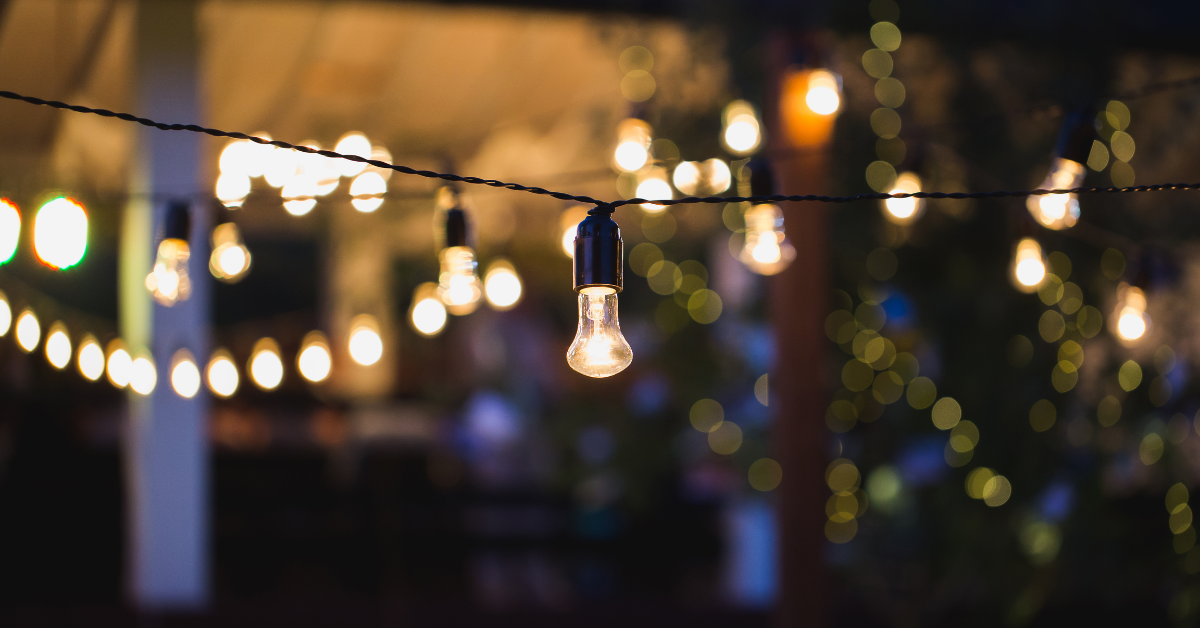
Strands of twinkling, gleaming lights strung across the patio, the pergola, or the fence line, and the backyard looks like something out of a magazine. But nobody planned for the part that keeps it safe: where the power comes from. When it comes to outdoor light installation, the lights themselves are rarely the failure point. Rather, it’s the extension cord snaking through a door jamb into an unprotected indoor outlet that causes trouble. Fix that, and everything else falls into place. Here’s what you need to know about the outlet, the circuit, and the fire risks that show up when either one is wrong.
Why Outdoor Outlet Installation Comes Before the Lights
Most homes have exactly one exterior receptacle, usually on the wrong side of the house from where you want to hang lights. That mismatch leads to a few common workarounds, each with its own problem:
- Running a cord out a window or door: Pinches the insulation every time it closes, and the damage isn’t always visible
- Pulling power from a garage outlet: Garage circuits often share load with door openers, freezers, or tools
- Using indoor-rated cords outdoors: Not built for moisture or UV exposure, so the insulation breaks down fast
A dedicated exterior receptacle, placed where you need it, makes everything downstream safe. That’s the real starting point for outdoor outlet installation, before you even think about how to hang outdoor string lights along the patio or fence line.
Does an Outdoor Outlet Have to Be GFCI?
Yes. Code requires GFCI protection on any outdoor receptacle, no exceptions. A GFCI outdoor outlet cuts power in a fraction of a second, the moment it senses current going somewhere it shouldn’t, like through water, or through you. Moisture is a given outdoors, so that split-second shutoff isn’t optional. Not sure if your setup is GFCI? Quick check:
- Look for “TEST” and “RESET” buttons built into the outlet.
- No buttons? Check whether it’s wired downstream from a GFCI outlet elsewhere in the house.
- Press “TEST.” If power cuts and “RESET” brings it back, you’ve got a working GFCI outdoor outlet.
How Many Strands Can Your Circuit Handle?
Every strand has a wattage rating, and every circuit has a limit on what it can carry safely. Stay under 80% of the circuit’s continuous load rating; this leaves headroom instead of running things right to the edge.
Most breaker trips aren’t caused by the lights at all. They’re caused by everything else already sharing that circuit, like a refrigerator or a couple of AC window units. If your outdoor outlet keeps tripping every time you add a strand, that’s not a faulty outlet; it’s the circuit telling you you’ve maxed it out.
Extension Cords Are a Temporary Tool, Not a Solution
Extension cords are rated for temporary use. Period. Having one run all season is a classic extension cord fire hazard, and it usually comes down to one of the following situations:
- Pinched in a door or window jamb
- Run under a rug, mulch bed, or landscaping
- Daisy-chained with a second or third cord
- An indoor-rated cord used outside
- A gauge too thin for the length of the run
Every one of these creates heat buildup inside the cord, and that heat, not a spark, is the real mechanism behind the risk.
Wet Rated vs. Damp Rated (And Why the Cover Matters)
Damp-rated equipment works for a covered porch. Wet-rated is what you need for anything exposed directly to rain or sprinklers. The cover matters as much as the rating. An in-use cover stays closed even with a cord plugged in, keeping the assembly weather-sealed. A standard flip cover doesn’t, since it has to stay open to fit the cord. Quick check: If your outdoor outlet’s cover won’t close all the way with something plugged in, it’s not doing its job.
Are LED String Lights a Fire Hazard?
LEDs run cool, so they’re rarely the problem. The real failure points are the driver (the small transformer built into the plug), the connectors between strands, and any insulation that’s been nicked or worn down. Before the season starts, run through this checklist, looking for:
- Cracked housings on the plugs or drivers
- Corroded or discolored contacts
- Frayed or exposed cord insulation
- Missing or damaged rubber gaskets at the connections
Catching these early is a lot cheaper than dealing with them later (the same logic behind a broader home electrical inspection).
What Outdoor Outlet Installation Costs
Pricing depends on how far the new outlet sits from your panel, what kind of siding you’re working with, and whether it needs a new circuit or can tie into existing capacity. Straightforward jobs land on the lower end. New circuit runs or siding work cost more. Permitting and inspection should be part of the job, not an afterthought. Ask about it upfront with any electrician working in your service area.
When to Stop and Call an Electrician
Some signs mean it’s time to stop troubleshooting and call in a professional:
- A GFCI or outdoor outlet keeps tripping and won’t reset
- The cord, plug, or outlet feels warm to the touch
- Lights flicker while running
- Any scorching, discoloration, or burning smell near an outlet or cord
- The breaker trips as soon as the lights come on
To be clear, none of these are “wait-and-see” situations.
Skip the Workaround. Wire It Right the First Time
String lights aren’t the risk. An unprotected, overloaded, makeshift power source is, and so is an extension cord fire hazard leftover from a setup that outgrew its outlet years ago. A dedicated outdoor circuit with proper GFCI protection turns “hope this cord holds up” into a setup you don’t have to think about, whether you’re figuring out how to hang outdoor string lights for one summer or building a permanent patio setup for years to come.
Ready to do it right? Get outdoor outlet installation and lighting service, or reach out to schedule a visit.
Contact us to learn more about stress-free maintenance with the Holtzople Comfort Club – Enjoy the following and more!
- Priority scheduling
- Discounts
- Seasonal maintenance
- Peace of mind